
Habitat & Conservation
|
05/06/2026
PODCAST EP. 363: Hands-On Habitat: Restoring Texas High Plains for Upland Wildlife
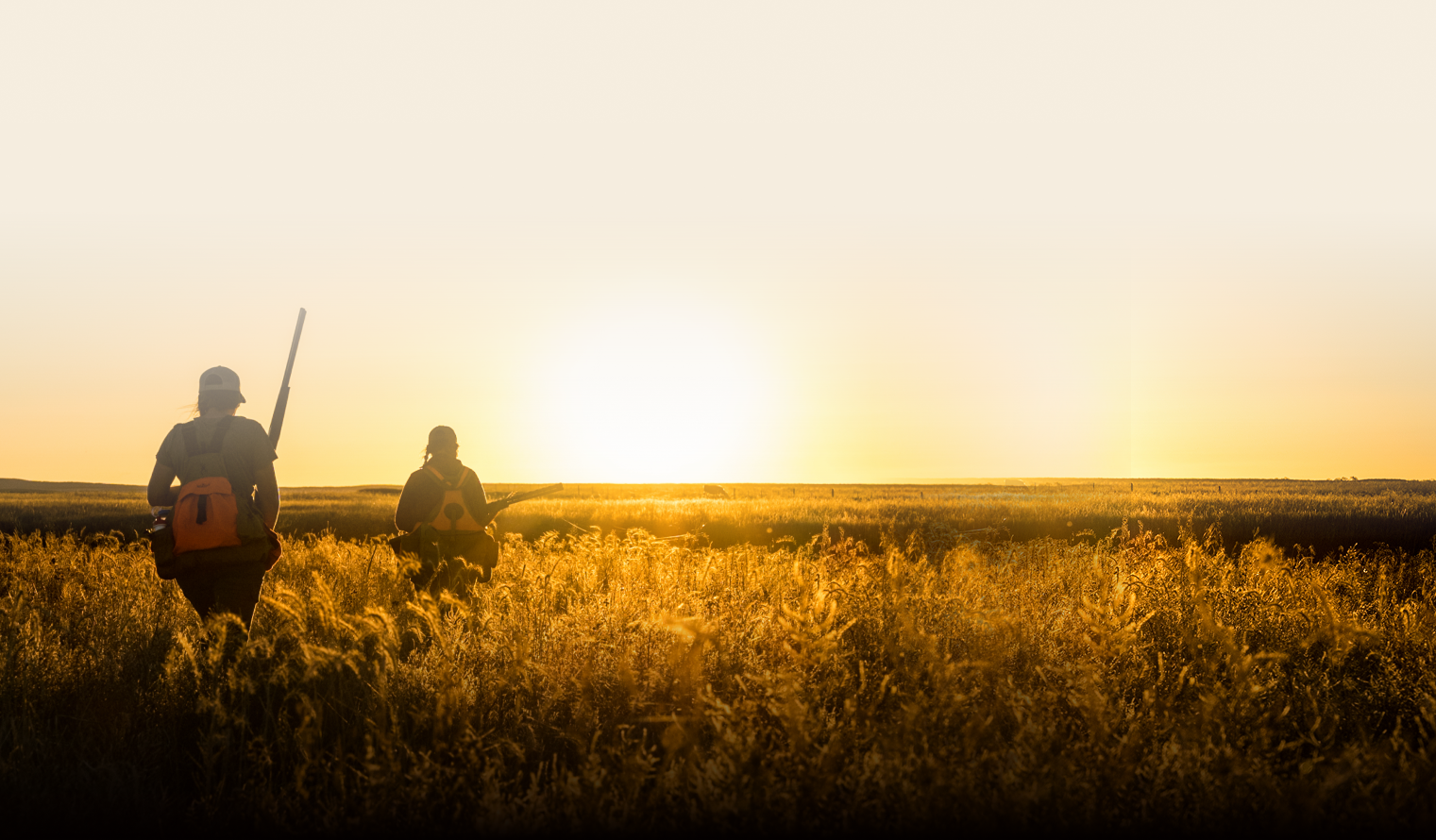
Deep in the Texas High Plains, a committed group of conservationists is proving what's possible when habitat work meets community grit.
Related Podcasts


Listen & Subscribe:
"On the Wing Podcast" is proudly fueled by Purina Pro Plan.
Episode Description
Deep in the Texas High Plains, a committed group of conservationists is proving what's possible when habitat work meets community grit. On a sprawling 9,000-acre property at Palo Duro, volunteers, biologists, and land managers are tackling real-world challenges like invasive species, wildfire mitigation, and declining upland bird habitat through hands-on conservation projects.
This conversation dives into the strategy behind a multi-day habitat event that blends prescribed fire, chainsaw work, native grass restoration, and one coordinated volunteer effort. The result is healthier grasslands, improved habitat for bobwhite quail, scaled quail, pheasants, and mule deer, and a blueprint for habitat restoration that can scale up or down anywhere in the country.
Beyond the land itself, the real impact shows up in the people. From college students launching wildlife careers to local volunteers rediscovering a passion for conservation, this effort highlights how hands-on habitat work fuels the future of upland hunting, bird dog culture, and outdoor stewardship.
Show Notes
Get involved with PF & QF's Hands-On Habitat efforts by identifying volunteer opportunities in the areas where you live and/or hunt by visiting Hands-on Habitat.
Thanks to John Deere, Irish Setter, and Orvis for sponsoring PF & QF's Hands-On Habitat efforts across the country this spring.
View Transcript
Transcript for On The Wing Podcast Ep. 363: Hands-On Habitat: Restoring Texas High Plains for Upland Wildlife
Speaker 1 (00:50.742)
Welcome to On The Wing podcast presented by Purina Pro Plan. Today, it's our annual Hands On Habitat episode of On The Wing podcast. And to kick us off, back by popular demand, co-hosting this episode and getting us rolling, Marissa Jensen. Marissa, take it away.
Speaker 2 (01:17.386)
Alright Bob, here we go. Northern Bobwhite, Scaled Quail, Whitetail Deer, Mule Deer, Ring-necked Pheasants, Dove, Waterfowl, Songbirds, Pollinators, Reptiles, Amphibians, and more all call the Palo Duro Water District home, along with a diverse number of range and wetland plants native to the southern Great Plains. Our guests today hosted their first hands-on habitat event not on one day.
or two, but over the course of three days to emphasize maximum impact on the landscape and to reach a broader audience. People of all ages found opportunities to dig in and make a difference last spring as part of the inaugural Texas High Plains Conservation Weekend. So we're here today to discuss the story behind last year's Hands on Habitat Month grand prize winner. And what I just read from is actually an excerpt from their winning story submission.
This chapter's efforts highlight the importance and impact of coming together, building community, the history of a unique section of public land, and the work the people of Texas are doing to preserve it. We're recording this episode just in time to help inspire you to get out and participate in Hands-On Habitat Month this May. Each year, our chapters, volunteers, and supporters come together to make a lasting impact for upland wildlife and habitat.
Every May, we have the opportunity to highlight these efforts during Hands on Habitat Month. This is our annual call to action, a chance for all of us to roll up our sleeves, get our hands dirty, and demonstrate what conservation looks like in action. So joining us today to discuss last year's efforts and upcoming opportunities, we have two gentlemen, Robert Howell and Russell Shaver from the Palo Duro Pheasants Forever chapter, and Thomas Yonkey.
Texas State Coordinator for the Organization. First off, before I hand the mic over to you all, I just, I wanna say thank you. It was incredible to be able to read the story that you all submitted and see the impacts that you all had on the landscape during last year's event. And just really excited for you guys to be on the show today to talk about what you did, the efforts and where you plan to go next. So.
Speaker 2 (03:40.77)
I think we'll start with you, Russell, if you could tell us a little bit about your story and how you became a Pheasants Forever volunteer.
Speaker 3 (03:50.542)
Thank you for having us today to talk about this. I'm lifetime resident in Spearman, Texas, electrician by trade. Originally, our chapter began in 2019 with six to eight members. I was originally tasked with the Habitat Chair, which I still hold today. Our original president took the job opportunity in Canadian Texas.
and moved over there a couple years into our chapter's beginning.
And I've been the president ever since pulling double duty. The Habitat Chair is the part that I really enjoy. The presidential part is mostly out of necessity, to be perfectly honest, but I don't mind it. I don't mind it at all, actually. Originally, the 12 of us got together with the regional coordinator just to see if there was the opportunity here to do a chapter, and he agreed that there was.
Our chapter actually covers 10 counties. It's a rather large area for the number of members we got. haven't really had the opportunity to spread out as far into our chapter as we would like yet, but we're getting there slowly but surely. We reached out into Hutchison County, which is just south of us, some in Alcatraz, but primarily we're in Hanford County. That's where Ballinger Water District's based, just north of Spearman here.
It's been a blast working on that project out there. It's been so fun. Yeah. I've enjoyed it so much. Going better than I could have ever imagined.
Speaker 2 (05:35.0)
What's the size of your chapter now? How many people?
Speaker 3 (05:39.406)
We actually have more members that are college students in WT in Kenya, which is just South Amarillo from last year's event that we did. if I'll, that sign up, had quite a few sign ups and I'll, I should have looked before, but I want to say we're only at 35 to 40. I mean, we're not a large chapter at all, but luckily with the 35 or 40 that we have, we're able to do a lot.
We're blessed with the ones that we do have that put in the effort that they do.
Speaker 2 (06:12.834)
Yeah, that's incredible. mean, sometimes it's smaller number, but bigger impact and, you know, never, never, you know, look away from that. So yeah. And let's see, we've got Robert here. So you are also a chapter member, but you are a Palo Duro Lake manager as well, correct?
Speaker 4 (06:34.028)
Yes, I'm the general manager out here.
Speaker 2 (06:35.714)
Yeah. So tell us a little bit about volunteering, but also the work that you do there.
Speaker 4 (06:41.582)
Thank you for having us. way I became a volunteer was basically through necessity that I came out, this I'll have, this will be my fourth year as general manager on the 27th. And we had a board meeting and one of our, the board president and the secretary were talking about that we were going to be just overrun with Yucca and Juniper's if we didn't do something. And I mentioned that to Russell and he'd already had schemed and planned and he'd actually had,
couple of pheasants forever guys out on property and and so I've been a farmer most of my life and so to us to all farmers that most wild flowers or weeds and so this has opened up a whole new chapter for me so it's been exciting just to get out and see things and look at it a different way and it's been amazing just to see how how involved pheasants forever can be with a little group like us and so I've enjoyed it.
Speaker 2 (07:41.272)
Wonderful. Can you tell us a little bit about the property itself too, just to kind of paint a picture for our listeners and what makes that place so special?
Speaker 4 (07:51.682)
Beautiful. It's we have 9,000 acres roughly. We're just a tick under When you think of the the panhandle of Texas most people just picture really flat and grass and farm viand and this has we actually have canyons We have a lake with not much water in it right this second. Hope Springs eternal though and it's we have a lot we have areas from pure caliche rock and
To the other side we have where the creek ran. It's pure sand and we have some of the biggest cottonwoods in the area We have we have junipers, but we also have choke cherries. We've got Some a lot of hatberry trees that have really come on and it's just beautiful I was gonna say this I like to say this is I have forced gump my way into one of the best places in the world and we have
truly the most incredible sunsets. And if you take the job, you have to live on property. it's, it's like I said, this is a true blessing in life that the Lord gave me a heck of a gift here. Yeah.
Speaker 2 (09:03.502)
Well, mean, just reading the submission that you all had, the amount of wildlife, I think that was one of my favorite things reading that. so, you know, obviously that has to be a pretty diverse landscape to capture all of that. And it just, it sounds incredible. I think we're all going to have to visit there sometime soon so we can see it for ourselves.
Speaker 4 (09:23.672)
Love to see you.
Speaker 1 (09:24.622)
The diversity of wildlife is what grabbed me too when I read that. Waterfalls, songbirds, pheasants, scale quail, bobway quail, mule deer. I didn't even know there were mule deer in Texas. Reptiles, amphibians. I guess I'm curious both Robert and Russell, what's the coolest wildlife encounter you've each had on this property? Because I was out on a...
PF property in northern Minnesota. I was turkey hunting last week and my nephew was using the box call and turkey responded, but a bobcat came up and was looking for dinner and I saw a mink. You just never know what you're going to see. I'm curious what wildlife stands out in your mind. We could start with Robert. What wildlife species stands out in your mind?
from an encounter perspective on this property.
Speaker 4 (10:25.662)
Love the deer, the mule deer. We have a lot of whitetail, but the mule deer are kind of a neat thing to see. actually the screen saver on my phone is a mule deer buck that came to the window of my office and just a little bit away, just in the, in the grass out here and not a care in the world. But my favorite story on the other side of the property, my daughter lives and we have a, we have a two year old granddaughter.
And she's a future wildlife biologist. is fascinated with all things animals and they had some turkeys that came up to the house and she was so excited that she ran over and ran into the window and scared them all away. But no, it's this place is, it's incredible. We have the bobcats. I've seen them. We had some really good photos with parks and wildlife came out and we did some wildlife surveys and deer surveys.
had some really neat videos of a bobcat sit right in front of our pickup, not a care in the world and blocked our path until we were, until he was done and walked off.
Speaker 1 (11:32.182)
Russell, what about you? Anything stick out in your mind?
Speaker 3 (11:36.118)
I've got two stories. The first one back in 97. Before I had my bird dogs, I had a couple of cow dogs and I would take them out there on occasion just to let them run around. And I was going down the road on an area that's known as Horse Creek View, which is one of the two creeks that drain into Palo Duro Lake.
Pretty steep road going down, cleachy road. And when I got to the bottom of the road where my dogs could see up creek, to say that those dogs lost their minds is an understatement. They were barking and making noise and just irritated as they could be. I finally looked up creek, biggest mountain lion I've ever seen in my life. The thing was clearly a male, clearly a male.
I've only seen a mountain lion twice in my life, but this was clearly a male and it was 300 yards away, but it couldn't hear me. Couldn't hear us because of the North wind finally. And it was walking away from us headed up Creek. It finally heard the dogs barking, turned around and saw me. It was walking right along the edge of horse Creek from the edge of horse Creek to the West, to where the Valley starts to slope up to the cap rock.
That's 150 yards, maybe 200 yards, another 250 feet up with a 25 foot cap rock on the top of it. That mountain line went from the creek to the top of that cap rock in less than six seconds. Wow. Wow. I've never seen anything move so fast. And it cleared that cap rock in one jump. Huh. It was gone. That's the first one. The second story is for a lot of the people that are lifetime residents here, there used to be a
white tail gold out on the property back in the early 90s that everybody called the or no, I'm sorry. It was a mule deer, but everybody called her the short ear doe because her ears looked like two nickels glued to her head. And they very small, but she would raise her two twins that she had every year plus three or four orphans every year. would, you would see her in the campgrounds down behind the damn pretty much.
Speaker 3 (13:54.798)
pretty much every spring and she would have at least four bonds with her every year. She was a baby raising machine and not just hers. like I say, those are the two, those are the two stories for me that stick out about the property. Every time I'm down in the camp and occasionally I still see a doe that has pretty small ears and I got to think that that's the genetics from her. is, it has to be, but they don't, they're not as small as hers were, but hers were.
I can't believe she survived as long as she did. She couldn't hear very well. There's just no way. anyway, those are my two stories, the mountain lion and the short ear doe.
Speaker 1 (14:27.981)
Hmph!
Speaker 2 (14:31.15)
Yeah.
Speaker 2 (14:37.482)
those are awesome.
Speaker 1 (14:39.714)
Yeah, very cool. Sorry to interject, Marissa. But same thing captured my attention with all the, you you start off, Boboids and scale quail and pheasants and then, you know, muleys and mount lions and it just sounds...
Speaker 2 (14:54.968)
We didn't even have Mountain Lion on there, so add that to the list.
Speaker 1 (14:58.242)
Sounds like a place that I would love to visit one day. So go ahead, back to you with the introductions.
Speaker 2 (15:04.97)
Yeah, well, no, I mean, we're going to hand it over to Thomas, but I feel like we kind of have to ask Thomas now, what if he's had any great wildlife encounters there before getting to any other questions.
Speaker 5 (15:17.102)
Yeah, I've been, I've been very blessed to be, Russell's actually the who introduced me to this property. I think my first visit was about Thanksgiving of 2023. And as Robert alluded to, Russell's got a lot of things scheming in his head, things that others can conceptualize and things that are beyond my purview. But hey, it's magic when it comes together.
for instance, you'll have to ask Russell sometime about his reseeding technique of native grasses and using a dog's to do it and covering acres and acres and acres at a time. It's amazing. But anyways, now the, don't have any of that great a wildlife stories yet. but probably my favorite experience last year when we had the hands-on habitat event, we made it very friendly. Marissa, we had a talk.
myself, you and some others included about a month ago and we talked about the three C's. We talked about chapters, we talked about community, we talked about collaboration and everything's just so welcoming. They're mainly because of Robert Russell, their staff, their family. It's all connected and that community there. Heck, even the guy, the folks we, when we stay with at the local motel, there's one, maybe two in town, basically greet us by name when we come now. But
It's so welcoming a family. And I was able to take my two little kids out there with us last year, the in-laws, and Robert talked about there being some of the biggest cotton retreats. He wasn't talking about the county. He's talking about the state. And could be southern grasslands, or excuse me. Anyway, Southern Great Plains. I don't know.
I don't know their exact size, it wouldn't, it wouldn't surprise me if they were over 30 feet, 30 feet circumference on some of these cotton lids there. so it's just a really neat experience. The viewshed, the just everything, but the passion that Russell, Robert, and so many others bring to the table is contagious. And it makes me and my team, even though I have a seven plus hour drive to get there, we had team members travel 13 plus hours to get there. They are eager to go back this year here in a couple of weeks.
Speaker 2 (17:30.19)
So, I mean, tell us a little bit more about what you really find, you know, special and unique, because I certainly did when I was learning about this project of just bringing so many different people together. I mean, you had chapter volunteers from, you know, multiple chapters. You had your biologists that were there helping out. had team members. You had family. You know, why did you feel like that was really important to create this collaborative community around this event?
Speaker 5 (17:57.454)
I don't know if it was initially intended to be that, but it organically became that. And so from my perspective as a state coordinator, especially I'm looking for any reason to get my team together. And especially with us being grant funded or donor funded, we got to justify those long travels. And so we purposely loaded the agenda to be a full extent with the multitude of things over multiple days to say, Hey, we're going to get our bang for our buck when we travel there. And then the...
Some of the practices such as prescribed fire, they were mother nature permitting. had no control over that, but we were going to have a loaded agenda regardless. then, and then regardless working with, Russell again, the things bouncing through his head on, on to do's we had to reel them in and say, okay, here's the amount of time we have. Let's attempt to do some of these things and save some rest for future years. we're, we're slowly starting to work off his, his and Robert's, wish list. and it's just grown. We've.
We've had a lot of learning experiences from last year and we can touch on that later. But we, again, just from our previous experience, because this was not our first trip out to the Palo Duro working with the team, but this was the first formalized event that we hosted where we were trying to get a workshop to involve local landowners. We were trying to get...
an official hands-on Habitat Day, so we made it more of an event as opposed to, we're going out there and we're doing a fire training or we're going out there and doing a burn. So we made it more than our typical rendezvous out there.
Speaker 2 (19:33.548)
Very cool. Yeah, I mean, it just seeing the photos of all the people coming together and just everyone working, you collectively with with one objective, truly was amazing to see.
Speaker 1 (19:45.198)
So, we will transition to what it means to have an official Hands on Habitat Day and Marissa tell us about the Hands on Habitat Initiative for the organization. Before we get that rolling, I want to thank once again, Perina Pro Plan as the national dog food sponsor of both Pheasants Forever and Quail Forever's Wildlife Habitat Mission and the presenting sponsor of On the Wing podcast.
Parina has always supported our conservation mission, which is incredibly important to me. But what's most important to me is that Parina is a team of the world's best scientists and nutritionists behind their dog food. My dogs have always eaten Parina ProPlan because it was created for the working bird dog like yours and like my little Gitchy in my little winter. You can learn more at Pro...
Plansport.com. All right. So Marissa, we've been doing Hands on Habitat. Started off as Hands on Habitat Week and has evolved into Hands on Habitat Month. For folks that aren't familiar with the concept Hands on Habitat, give our listeners sort of the overview so they get an understanding of what's going on.
Speaker 2 (21:08.15)
Yeah, well, you know, I always I always explain it in the way of Habitat is who we are as an organization. I mean, is literally our mission. And so, you know, to me, Hands on Habitat is just this great way to rally together, connect us all back to our mission and really to who we are as a grassroots organization. mean, the impact that we have locally, it really can't be overstated. You know, when we're able to see
what individuals like Russell and Robert and Thomas can do or pick a state, pick a chapter. It's truly amazing. so it's just a way for us to collectively encourage everyone to get out there, put conservation in action, and have a little fun while doing it. And the projects are truly as diverse as the landscapes that we are working toward. They can be pollinator plantings, shrub plantings.
invasive species control, a trash pickup. I live in a big city and so sometimes finding places to do a project can be challenging. so get out on a local wildlife management area, help clean up some barbed wire fence or trash. There's so many opportunities out there. If it's something that's going to positively impact our grasslands and the ecosystem, it's something that we want to encourage.
I think the best part about Hands on Habitat Month is that is an opportunity for us to just celebrate all the great work that's happening. We know that this is something that takes place all year round in various ways. And so this is just a way for us to elevate the great work that's happening and get really excited and share those stories with everyone else.
Speaker 1 (22:57.166)
The most frequent question I get from volunteers and social media followers where we start promoting Hands on Habitat, I get the question, can I be part of a prescribed fire? We've got lots of pyromaniacs out there. The answer is sort of, it depends, right?
Speaker 2 (23:18.786)
Yes, I love that. It's not a clear yes or no. It's like, well, maybe. I think, you know, honestly, the best thing to do is if you're interested in any kind of habitat work, check out our websites. So pheasantsforever.org backslash hands on habitat. Same with quailforever.org slash hands on habitat. Go in there, type in your zip code or if you know the name of a local chapter, you can do a search that way.
And hey, if there isn't one, this is a great opportunity for you to get involved. Or if you have any questions or troubles, just shoot us an email. The quickest way to do that is just habitat at pheasantsforever.org and we'll get you taken care of.
Speaker 1 (24:00.896)
Yeah, right. And special shout out to this year, we've got three brand new sponsors of Hands on Habitat. Irish Setter, our official boot, is a sponsor of Hands on Habitat Month. John Deere, our official habitat tractor. And Orvis, makers of great upland hunting clothing. Speaking of John Deere though, want to thank them.
They are habitat builders and they are inviting you to run with us. During hands-on Habitat Month, Pheasants Forever and Quail Forever are putting boots and tractors on the ground to create better habitat, expand public access, and fuel the future of Lepel and bird hunting. And with John Deere, you've got the power to get it done.
Also, as a proud national sponsor and official habitat tractor of Pheasants Forever and Quail Forever, John Deere is helping members go further with exclusive discounts on compact utility tractors through the John Deere Rewards Program. Because you don't just care about pheasants and quail, you care about doing the job right. You can sign up at johndeerewards.com slash
Pheasants. Again, that's johndeerewards.com slash pheasants or slash quail. Nothing runs like a deer. Well, pheasants run, scale quail run, but nothing runs like a deer. Run with us. Thank you to John Deere. All right, Marissa, back to you.
Speaker 2 (25:45.42)
Yeah, yeah, well, and I just I have to also, you know, give an additional shout out to our sponsors this year. It definitely makes a huge impact when we're able to bring like minded individuals together. I'd love to dive in a little bit more with each of you just around the planning of the project and you know, what all you did. So Russell, I'll kind of start with you. But you know, certainly this this question could apply to all of you. So just
Tell us a little bit more, you kind of started to on how you organize the event, primarily how you brought other chapters together to coordinate this and then what truly made it an exceptional weekend do you feel? What was kind of that thing that stood out that you're like, this is really what did it for us?
Speaker 3 (26:34.678)
the way it come about is a good question because I'm not even sure. It was originally touted as hamburgers and habitat and it was just going to be a one-day event with a prescribed burn hopefully but mostly just a workshop like Thomas talked about followed by a prescribed burn. The next meeting we had we're talking about two and a half days and I don't know and like I'm I had a
I suspect a lot of that had to do with the fact that Thomas has to justify a trip that far. Him, Robert and Will probably got together and then as usual, on the last to know, which is probably for the best.
Speaker 3 (27:20.494)
The chapter that helps us a lot is the Amarillo chapter. The group that comes up here, the five or six they normally send is a lot of them are retired firemen, were firefighters for the county, I believe. And so once they found out that there was the opportunity where they could be involved in, you know, doing what they used to do for a living, they jumped all over it. I mean, they couldn't get here fast enough. that's how that
collaboration came about. And then the Plainview chapter, which I believe is called the High Plains chapter. Is that right, Thomas? They're sending a group of guys up here this year for the Habitat, hands-on Habitat Day, to help with any cleanup and brush removal and things like that this year. But the part that I enjoy the most, last year, as Thomas said, it was focused more towards landowners. The problem with that
is it lines up right with the beginning of corn season. So everybody was planting and trying to get ahead of a rain that was coming. So we didn't have very many, no fault of their own, it is what it is. Just couldn't show up even though they had signed up. But we did have four or five students from WT showed up and they just had a blast. And they've been up for basically every burn we've done since. They've been here for three or four of them and
They've actually started a pheasant survey study up here, the parts of wildlife grant. So they're up here often. And that's been the part. And I think that's what this year is going to be focused more towards. If I understand right, we have, we're getting close to a hundred students that are going to be at the event we're doing this year from the local high schools and West Texas A University. So I'm just thrilled with that, with that. And that's always been my vision.
for that area is to be a 9,000 acre classroom for any student to come. there's something out there that can help them further their education, I'll move Heaven and Earth to make sure that they have the opportunity to do it out there. Very cool. So that's been my favorite part of these events is the kids.
Speaker 1 (29:42.51)
Yeah. Kudos to you, Russell, for having that perspective and taking it upon yourself to be a volunteer and, you know, having that vision to pass your love, your appreciation for what sounds like an absolutely incredible, special place to the next generation. So first of all, thank you. As we talk about this, and I think this question is for Robert.
You guys have mentioned 9,000 acre Palo Duro area. Is this a wildlife management area all completely open to public access, public hunting? Is this open to all people? is it more of a complex where there's some public, some private?
Speaker 4 (30:34.188)
No, it all is private or public. me. no, we, you can come out. have a day use that you just come on property, drive around. unfortunately I made a shot to get public hunting on, on half the property and my board, we had a few issues that they didn't like. And so we're, we're still working on it. Parks and Wildlife. He, I told him what was kind of going on and he said that this is not the end. This is just, we'll regroup and we'll take another tack.
Speaker 1 (31:03.544)
So it's 9,000 acres open to the public, but none of it is open to hunting at the moment?
Speaker 4 (31:09.998)
Not yet. Not yet. Not yet. So it's, like to say that it's, is public grounds and how do we get people out, you know, away from cell phones and back into nature. And so this is, like I said, this is a beautiful property. And so just come out, like I said, we have, we have burgers from Houston, which is 13 hours by car away that will come up that we had a pine growth speak. That was the first one seen in
Speaker 2 (31:11.726)
I feel like not yet.
Speaker 4 (31:37.774)
Texas since I think 92 a couple of years ago and people were flying in to come see this little bird that got lost. And that was my first experience with birding. And like I said, that's one of my new passions.
Speaker 1 (31:50.376)
Do you have a life list?
Speaker 4 (31:53.23)
I do. do. And it's, and it's growing. So it's like I said, this, it's not something I even expected just one day that, Hey, that's a tough to tip. You know? And so.
Speaker 1 (31:54.414)
Good.
Speaker 2 (32:08.379)
Okay, so did you see the pinegrouse week?
Speaker 4 (32:10.914)
Did I had, I had a guy that we were out walking and he does, pelagics, which I had to look up what that was that they go out for waterfowl on like it on the ocean. And he came up and we were walking and he had the nice, he had a Savorsky optics and mine came from Walmart. So he let me look through them and I was fascinated, but no, we were just walking along and he was playing the call and I just happened to see it in the distance.
Like I said, and then he was so excited and like I said, just to see someone that excited, kind of it lit a fire in my soul that, Hey, this is something that gets people outside. And that's something that we're actually talking about and no, and uh, Nolan talking to the wildlife biologist for QF and Russell were wanting to do a bird blind to get more people out. And that's one of our projects. So it is cool.
Speaker 2 (33:01.634)
Very cool. Yeah, yeah, I certainly, birders travel, think more than most hobbies I've ever seen. I, had a Limpkin come to Nebraska, which is, I think they're normally in the South, but maybe they come to Texas, but I think Florida is typically where they are. And I'm telling you.
people from out of the country came to see this thing. I mean, it was unreal and you had to go through all these trees and to get to it and wade through all the stuff and what people will do to see birds is amazing. I absolutely love it. that's cool. Well, you'll have to let me know next time that you guys have some rare bird come there. We'll travel with the hordes. So yeah, mean, Robert, what the...
you know, since we're with you right now, like, what do you think was one of your favorite memories? love getting the kids out there. And I think that's so important. You know, those hands-on outdoor experiences and, you know, curious what you think of the weekend.
Speaker 4 (34:04.366)
Like Thomas was saying the seas that mine, the one thing I'd like to add into that would be children that one of my favorite things of that weekend that we did, um, the one 71 burn unit or three 27 anyway, um, with sun was kind of setting and we got some pictures with kids and I got a picture of, uh, uh, Will Burkhead holding his son, Daniel. And you know, I just thought that was so cool that another generation that gets to come out.
And like Thomas said that his in-laws were here and his children, and it was, it was so much fun. But the other thing would be the connections that, some of the volunteers from the Amarillo chapter when they were here, like said, firemen and they got to run chainsaws and, and I got to spend in one of our burns with one of those guys, guff and it was so cool that just, you know, his fire went in, like said, we were.
sun was setting and we had some blue quail ran across and he'd like leans across the pickup and the brush truck that we were in and he's snapping photos as fast as he could. And this is a hardened fireman that's retired. He was like a little kid again. And that's what, like I said, just the passion that comes from birds that can jump out and let people see. that was just, that made everything, the sweat, the hiking, the chainsaw work, that made it just totally worth it right there in that split second.
Speaker 2 (35:29.932)
Yeah. You guys, okay, so talk to us a little bit too about everything you did. So we've talked about prescribed fire, you talked about chainsaws. I think you even did some integrated monarch larvae monitoring. What was all the different events that you had over those two and a half, three days?
Speaker 4 (35:50.018)
We did what we had the Nolan had his the the monarch surveys and then we did plant identification in that in those grids. I'm trying to think what else we did. We did the quail surveys and we went out and listened to that. That's what one of the funniest things that Russell and I have done that couple of times and we found out that we're both
deaf as can be. then whenever Nolan came, he was hearing birds way more often than Russell and I did. So that was a lot of fun. they say Thomas, you've got a better memory. I was trying to think I've brushed over several things and I can't think right this second that what all we did.
Speaker 5 (36:35.662)
I think a lot of it was the, spent a whole morning somewhere else. Again, we had a stacked agenda purposely, kind of alternatives. If weather didn't allow us to be outdoors, what could we do? Well, weather was, weather not only allowed us to burn one day, but we weren't, we burned back to back days and I forget the total acreages it was. but everything else we still accomplished, but we worked around the burns. We'd either do it,
the, in the evenings or, you know, whatever time, but the, did fit in a, a landowner workshop, which even involved the local, think 4-H group and their parents, cause they helped cook for us hamburgers that day. as they said, we did some Monarch monitoring as part of a IMMP or integrated Monarch monitoring protocol. we did that, I think on three transects and we even had people come out that, that are not necessarily your,
your hook and bullet type of conservationist, we had individuals come out specifically for the Monarch monitoring part of it and they, they ate it up and loved it. And so it got them exposed to the property. We had a, chainsaw work, had some designated areas that again, this was backup plan. If we can't burn, we're going to be put in sweat equity some way. so Robert and Russell identified areas, Hey, where's.
where somewhere that would be advantageous to be doing chainsaw work to either clean up areas that we had previously burned or prepping for future burns. And so that's, that's what last year's event was. and, we extended across two and a half days and then we kind of did some, some field tours and just hanging out. And, if memory serves me correctly, Robert, I think as we were pulling out that night, or maybe one of our previous burns, we were getting drizzled on afterwards. So the recovery was pretty immediate. And a lot, a lot of things learned from that and it's just.
grown from there. think I'm even more excited about what we're going to be doing in less than two weeks or our next event there. We're calling it, I don't want to say annual event, but this is two for two. The event we have in two weeks is slated to be similar, but a different target audience with the education. That genuinely excites me. And we've involved more conservation partners now. We've involved more speakers. We've involved more students and communities. So it's,
Speaker 5 (38:55.266)
getting a lot of traction.
Speaker 2 (38:57.418)
Yeah, I mean, tell us a little bit about what what are the plans for you all now that you've you've kind of set a standard here. I hope you're you know that, you know, you're going to have to continue to.
Speaker 5 (39:08.568)
So some of the, again, the idea, going back to the basics from my perspective, I think one of the successes we had last year was we got our Pheasants Forever, Quail Forever staff, so my team, involved with at least one local chapter. And it just so happens we did it on public lands where the fruits of our labors could be enjoyed by many for years to come. It was a very successful model and that success wasn't
for me, for my team, it was a lot to do with Robert and Russell, but really it involved a lot, just many hands making more fun work. I'm not going to say it was light work, but many hands making more fun, enjoyable and appreciated work. And then we, as Russell made comment, we learned, hey, we like this education component, but let's have, let's switch gears and really target students. And through Russell's efforts this year, we have interest and potentially commitments from both the public schools.
and the homeschooled students across the entire county this year. we're, we're, have potential to, to maybe be having a hundred, if not more than a hundred students here in a couple of weeks come out for a day. Wow. And that, that's, that's going to be day one kicking off of our three day event this year. And as we're going to purposely be doing a round robin series of events, we have our local, um, we're going to have multiple members of our teams doing different things from big game ecology. We're going to have a, a.
an entomologist come out and do presentations on that, be it pollinators or other neat cool things that you don't really stop, pay attention to and appreciate. We're going to be talking about grassland management, upland bird ecology and management, prescribed fire of course, Texas A Forest Service is coming out with a dozer so kids can see, touch and see a dozer. Going to have a drone operator coming out and showing herbicide application and just a lot of different things that are applicable to conservation.
And conservation management there in the high plains of Texas. And then weather permitting, we're going to always try to fit this in in our routine, but weather permitting while the students are on their lunch break, we have about 20 acres that are within a paved parking lot area or surrounded by pavement that we're hoping to do a learn and burn in which the students can be eating their hamburgers that Robert's son-in-law is going to be cooking. think he calls him SpongeBob because he's a master of the grill. And while he's, while he's,
Speaker 5 (41:37.922)
helping with all the hamburger and stuff and they're enjoying it. We're to have our team hopefully burning and we're going to be narrating that process. So that many new people can be exposed to one, not all fire is bad or detrimental fire. And two, showing them the positive results and impacts a management practice such as fire can have, because this part of the state, as Marissa, you know, you're in Nebraska right now. There's a lot of sensitivity to fire there in the Great Plains.
Speaker 3 (41:48.502)
One
Speaker 5 (42:07.156)
And that's not taken lightly and being sensitive to people's lives and livelihoods. But the whole reason we started working with Russell and Robert on the Palo Duro Water District two and a half years ago was for wildfire mitigation. And how can we proactively burn and strategically burn around infrastructure to lessen the potential impact wildfires will have if that country is left unburned? And that's where it started. That was the nexus two and a half years ago.
Since then There there's been over nine prescribed burns on the property and I forget it's I think it's been it's been in excess of 3,000 acres and so they're slated to burn the entire 9,000 acres in about a five-ish year rotate five to seven year rotation and so it's easy to say and it's easy to draw on paper, but what Robert Russell and their staff have done to make that a reality is unreal
Speaker 3 (43:06.015)
That's incredible.
Speaker 5 (43:06.644)
The the effort, the partnerships, and like he mentioned before our call, they've had a dozer out there the last couple weeks, excitedly prepping for future work.
Speaker 2 (43:16.918)
Yeah. I think what is really cool, I mean, there's so many aspects of that that are amazing. But I really love the different age groups and the individuals that you're getting out there to see those things because you're making conservation not only fun, but accessible. You're talking about the importance of fire. You talked about having an entomologist or talking about ecology.
There's so many things that then those kids can relate to on small patches of grass, if it's at a community garden or they go out somewhere like Palo Duro where you're talking 9,000 acres. They're able to look at the landscape differently when they have that kind of information. I just, to me, I think that's incredible that you all are doing that and that you're making that an overarching part of your efforts.
Speaker 1 (44:11.276)
So hopefully our listeners fall into two categories. Maybe you're a chapter and you're thinking to yourself, we got to get one of these projects on our calendar. Or maybe you're a listener that's not affiliated with the chapter at this point and you're thinking, I want to get my fingernails dirty. I want to help create habitat for wildlife and you know.
Maybe be involved in a prescribed burn that mitigates wildfire. Maybe pull some barbed wire to prevent a dog injury. There's lots of ways to get involved. Marissa is going to tell us about what's going on for the entire month of May and how you, the listener, can get engaged. Before I go there, I want to once again thank John Deere, Iris Setter, and Orvis for stepping up as partners in Hands on Habitat Month this year. At Orvis...
Their connection to the outdoors comes with the responsibility to care for the outdoors we all love. That's why Orvis is proud to support Hands-On Habitat Month with Pheasants Forever and Quail Forever. This May, volunteers across the country will roll up their sleeves to improve upland habitat. They'll be planting, restoring, and doing hands-on work that conserves the wild places we all love. Join us!
Get involved and help keep these special, beautiful, wild places thriving. All right, Marissa, how do people get involved?
Speaker 2 (45:47.436)
Yeah, yeah. So, you know, obviously, if you're a listener and you're not connected with a local chapter, that's one of the easiest things that you can do is find a chapter near you, find a project near you. For those of you that are listening that are one of our chapters, you know, this is a great opportunity to create an event, recruit some individuals within your community to come join you with this effort.
We do offer some incredible incentives and prizes to celebrate with our chapters during this time. so qualifying events, as Thomas and others have mentioned throughout the show, weather is certainly a factor when we're talking about outdoor projects. So qualifying events actually take place April 1st all the way to June 30th. So if you don't have anything planned yet, that's okay. You've got some time. All they have to do is register their event through our Upland events platform.
that automatically enters them into winning one of our random prizes that we'll be offering this year. And we're really excited about doing random drawings so we can celebrate all those projects big and small, regardless of the size of it, just because we know different opportunities exist all over the landscape. We also really like to elevate different project stories, just like the one that we're talking about here today. And so...
Our chapters have opportunities to submit their stories for consideration for our Pheasants Forever Journal and Quail Forever Journal. The amount of incredible content, stories, photos, videos that we get from these projects, again, we just want to celebrate the great work that's happening on the landscape. so this is our opportunity to celebrate you all, to thank you all, and really to elevate the great work that you're doing across the country.
Hopefully encouraging others to get on board and either join an event or create their own by doing that. So definitely capture some photos if you're out there in the fields. Take some notes so that you can submit a story later. And then we will notify all winners by July 17th. So just once again, find an event. If you don't know of one coming up, check us out at pheasantsforever.org backslash hands on habitat or quailforever.org.
Speaker 1 (48:09.816)
Perfect website pheasantsforever.org or quailforever.org backslash hands on habitat type in your zip code and you can find a project Nearest you you might even be able to carry a drip torch Yeah, no promises, but maybe maybe maybe All right, so we'll go around the horn and put a bow on the episode with some closing thoughts
Since Baris is the quarterback of Hands On Habitat, she's going to get the final word. We'll start with Robert. First of all, Robert, thank you for not only doing this for your living, but also being a volunteer at the same time, pulling double duty here. Sincerely appreciate your volunteer efforts and be a part of this. What would you like to leave listeners with today?
Speaker 4 (49:02.894)
was going to say that I'm so excited about this upcoming event that we get to kind of help shape some new generations to come on property, to get their hands dirty, to learn about what we're doing and just kind of light that fire. But what I'm really excited about is that for high school students that how many kids don't have a clue that there's jobs out there that they can do for a career. that's so many kids just, you know, I can
I'm going to college. They don't really know, you know, that I think this is something exciting that they can kind of come out and like, like Thomas was saying, actually see a dozer and say, Hey, that this is something fun. There's fires that this is a, something that they never even thought about that parks and wildlife, you know, it's not just game wardens, you know, there's the biologists and that's what I think I'm, I'm really excited about. And like I said, just not just an iPhone, but
actually get to see it and touch it and make it a tangible thing to the kids.
Speaker 1 (50:06.53)
Yeah, word to the wise out there if you're listening kids, don't be an accountant, be a biologist. If you're to take away one thing, there you go. Russell.
Speaker 4 (50:20.366)
Brother Grawl just rolled his eyes, but yeah.
Speaker 1 (50:24.134)
Russell, you're an electrician, Yes, sir. Well, you could be an electrician and a biologist.
Speaker 3 (50:31.028)
I like, like Robert said, I didn't know who knew you could go to school and learn how to set stuff on fire. know, that's, well, Will has got one of the best jobs on the planet. Sorry, don't get hurt. But, to touch on what Marissa and Robert have both said.
Speaker 1 (50:39.703)
You
Speaker 4 (50:42.37)
Well,
Speaker 3 (50:53.398)
While yes, we have 9,000 acres of access out here to do these projects on.
Speaker 4 (51:00.782)
Don't.
Speaker 3 (51:02.936)
be afraid to do it on a half acre. You can still put on the same type of event we're doing on something half the size of a football field. And if you don't have one, build it. There's always a patch of dirt somewhere that's useless to everyone for anything. Build your own, start putting on a bench like these and get the kids involved. It doesn't take 9,000 acres.
Speaker 2 (51:26.647)
I love that.
Speaker 1 (51:28.59)
Thank you for taking on 9,000 acres.
Speaker 3 (51:34.004)
It's been so much fun and it's so, we talk about the junipers out there, but unless you've seen it, you can't understand just how bad parts of that property are. that's, I've noticed that from the lake level fluctuations. It's been below 30 feet for 15 years. And to watch just how fast all of that land that was submerged and had all the junipers killed out, just how fast.
those junipers took that land back over. There's thousands of them on a half a mile stretch that have grown since 2015. So I'd say this is something that's needed to happen for a very long time. Shout out to Colby and Trent, the two maintenance guys out at Palo Neiro Lake. Thomas commented earlier, they make our jobs so much easier. This would be nearly impossible without the work.
Those two guys have done mowing, plowing underneath our lines, dozer work on the tree lines, and the fire breaks with the maintainer. We work for them as far as I'm concerned. They're the ones that make this whole thing thick. Without them, these fires would be next to impossible.
Speaker 1 (53:00.15)
Robert, you wanted to jump in.
Speaker 4 (53:02.614)
No, what Russell was saying about the slow encroachment of junipers, there is, there was a one room school house that was on property in the thirties where kids would ride their horses, come to school. And we actually found the foundation of it a couple of years ago by mowing and by accident, just cleaning out some kosher weeds. And that building is in Spearman, the actual building. So we could prove that that was the foundation, but inside at our museum, there's pictures of it with some kids.
And in the background, we were able to find that that is the spot from the topography and some rock ledge in the background. But in the picture from the thirties, there was like three juniper trees. Well, after we found that, I have a picture here in my office with my grandkids in the exact same spot that you can still make out. It's the rock formations, but it's a solid green wall almost of juniper trees. And so
You know what Thomas was saying in less than two years, we've burned 3,601 acres and safely. That's the big thing. And so, you know, the burn plans and the things that Thomas has taught us, boy, it's, it's amazing that we've opened people's eyes to we're doing this safely. The grass and the wild, the wildlife and, the plants have responded so well that it's, it's, it's awesome. So, but like I said, that's a tangible thing that we can see.
from 1930 to 2026 that this is what's happened.
Speaker 1 (54:36.654)
So again, I want to reiterate, yes, to Russell's point, you can do habitat work on a half acre, but a lot of people would be intimidated taking on 9,000 acres. But it's testament to the work you're doing when you can tell stories about mountain lions and scaled quail and Boboits and mule deer.
It defies people's impressions of what's possible and maybe their misperceptions about what's in Texas. And it sounds in many ways like Noah's Ark. you guys have painted a picture of a place that I want to visit. It sounds beautiful and the variety of wildlife species is pretty incredible. So thank you for being volunteers.
getting this habits at work done and not being intimidated. Thomas, your final thoughts.
Speaker 5 (55:43.374)
I'd simply say, of all, Bob and Marissa, thank you all very much for having us. We're one of many across the country and maybe even outside the country that are doing hands-on Habitat events, successful ones, untold ones, et cetera. Thank you all for giving us an opportunity to recollect, share, and get excited about the future events in store for our area and others.
Bob, I'd also say you better be aware you said that Marissa was co-hosting this. She's, she's doing pretty dang well. You might be putting yourself out of a job as a co-host.
Speaker 3 (56:13.774)
If you see burl
Speaker 2 (56:14.583)
no!
Speaker 1 (56:16.206)
I believe, yep, you're right. She's probably my most frequent co-host over the years. You're right up there with Andrew and, well Casey's making a recent run, but. Yeah.
Speaker 2 (56:31.714)
Tough names to beat too. They're pretty good at what they do.
Speaker 5 (56:36.078)
So, but no, I'll simply say it's, it is truly a blessing to be not only working for this organization, but to be in a natural resource management profession. Because yes, we get to, we get to see some, some amazing places and, and be a part of learning not only from our experience, but more so from others and sharing that with, sharing that with folks, but it all boils down to the people. And if y'all haven't picked up on it today, whether it's y'all seeing us on screen or the listeners, these two gentlemen right here,
It's so positive, so welcoming and so contagious. It's somewhere that I feel beyond blessed to not only experience myself and bring my family into the fold, but my team. Like I said, we have team members all the way down basically to the Valley of Texas and to the Gulf of Mexico that we are working on getting them up to this property once again to come together and to make those memories and share those experiences. it's all about the people. No matter how big or how small, it's a...
It's a memorable experience. And so I just want to thank Robert, thank Russell and yeah, there in two weeks from now we're going to be, we're going to be having a heck of a shindig and looking, looking forward to what, what else is to come.
Speaker 1 (57:50.016)
Very good. Hamburgers in Habitat. Sounds like there's something for everybody, right?
Speaker 3 (57:55.5)
Yep. Yes, sir.
Speaker 1 (57:58.862)
Marissa, this is your baby. Put a bow on it for us. Final thoughts.
Speaker 2 (58:05.088)
Yeah, I mean, I just, I stay here and listen, you know, to the conversations and the work that you all have done, what you're planning on doing. And it's just really inspiring. I really think it helps make it more approachable how much we can make an impact by the work that we do. Every single person out there can do something that gives back to these landscapes. And I...
kind of want to steal, think it was our social media manager, Sam Wells, who may have said it. But recently I saw where he wrote that there's no off season. And I feel like Hands on Habitat is the prime example of that. There's no off season. It's opportunity for us all to get out there and truly make an impact. love these places, whether it's birding, whether it's hunting, fishing, it could be any outdoor activity.
but it's our chance to actually give back to those places so that they are around for us, for our kids, for our grandkids and so forth. And the more people that we can get involved to care about these landscapes gives us a better chance that they're gonna be around for generations to come. So I just thank you guys so much for the work that you're doing.
But also thank you for telling the story because that's what gets other people excited to go out there and do it, to try something different. that's what's going to get more and more chapters motivated, more and more of our listeners to get out there and join a chapter. So really thank you for what you're doing and I'm inspired. I'm ready to get outside right now and go do something.
Speaker 1 (59:52.718)
All right, folks, hopefully you've got the itch, the itch to get some habitat work done with us. Check it out. You can find an event near you. are hundreds of them happening over the course of May. Pheasants Forever or quailforever.org slash hands on habitat. Thanks once again to Irish Setter Boots, John Deere Tractors, and Orvis.
for being our corporate partners in Hands on Habitat Month. For Robert, Russell, Thomas, and Marissa, I'm Bob St. Pierre thanking you for listening and reminding you to always follow the dog. Something good will rise. Thanks, folks.
Your cart is empty